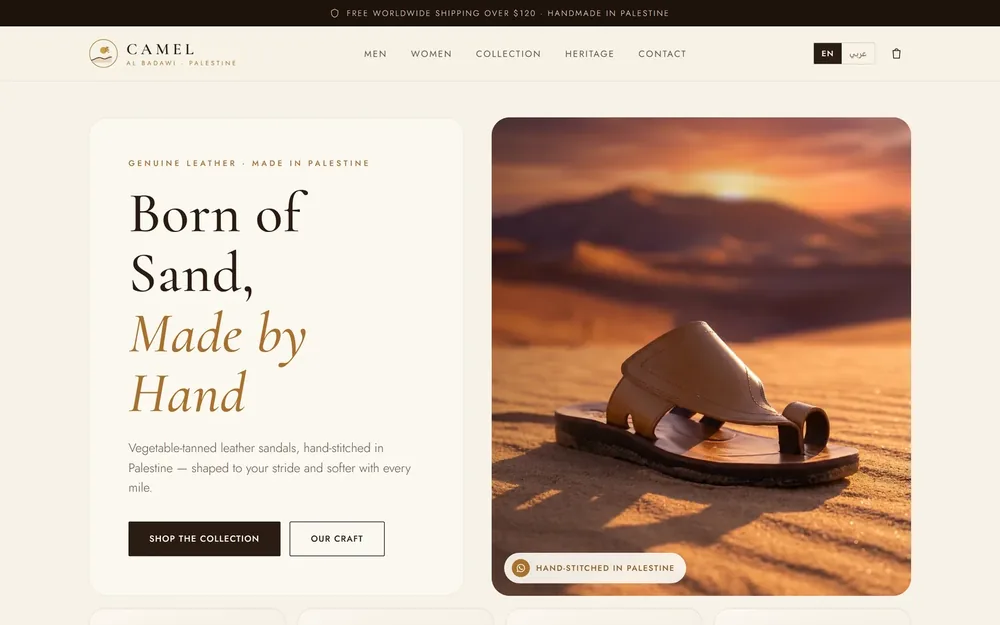
A bilingual EN/AR editorial storefront for a Palestinian artisan making vegetable-tanned, hand-stitched leather sandals — built to sell the craft and the heritage, not a marketplace listing. So a handmade $48 sandal feels worth every dollar, and the brand owns its story instead of renting it.
Visit albadawi-camel.vercel.app
Al Badawi Camel is a Palestinian leather house — vegetable-tanned hides, hand-stitched in Palestine, shaped to your stride and softer with every mile. Each pair takes a craftsman's hours, not a factory's minutes. But the way most artisan brands sell online, none of that survives: a single product photo, a price, a buy button — the exact same template as a mass-produced sandal made in a warehouse.
The brief was clear: build a storefront that lets the brand command artisan prices instead of racing to the bottom on a marketplace. A bilingual EN/AR shop — for buyers in Palestine and the diaspora, and for the worldwide customers shipping is built for — that makes a $48 handmade sandal read as the heirloom it is. Sell the hands, the heritage, the leather. Own the story, and own the customer.
A premium brand needs a site that looks as premium as its prices.
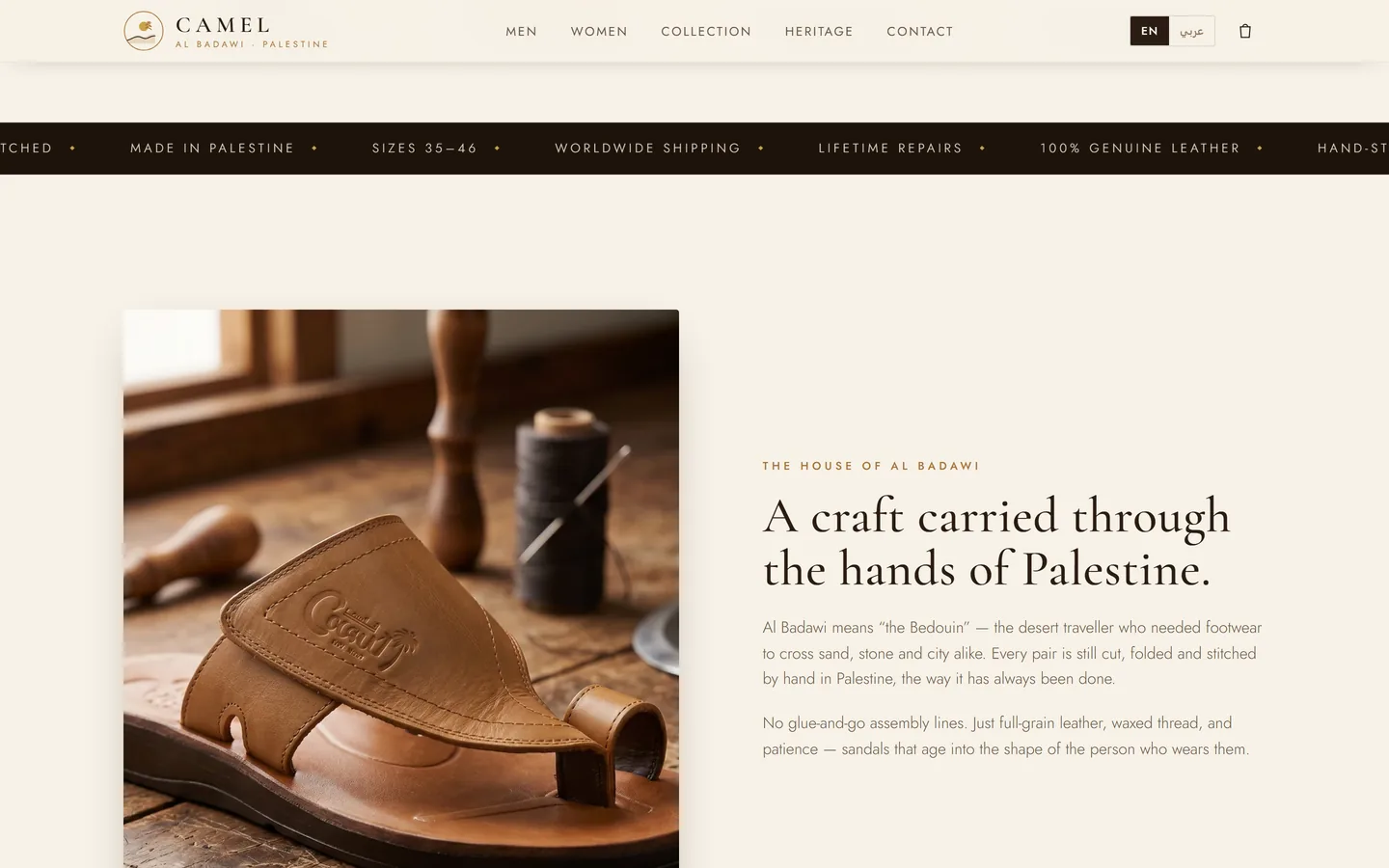
Warm editorial art direction — cream, sand, tan and brown — with an elegant serif display and desert imagery. Every section earns its place. No generic catalogue grid. No template smell.
A hero shot on desert sand, not a white studio cut-out. The first scroll tells you this is leather a person made — before any product, any price.
Every product, every heritage page, every line of craft copy lives in both languages. The Arabic shop is a native right-to-left experience — not a machine-flipped afterthought.
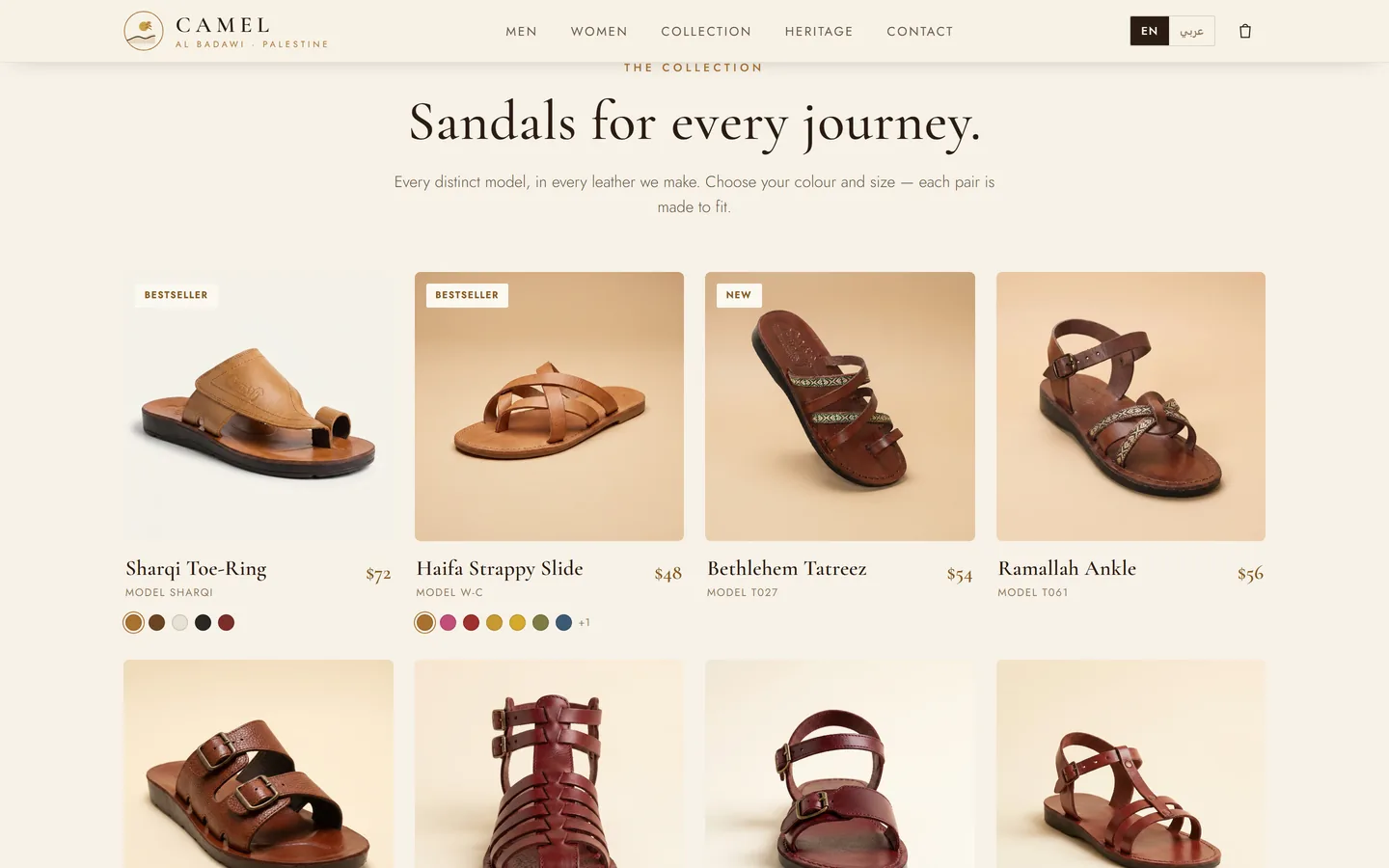
The Haifa Strappy Slide isn't "Item #48." Each page reads like an editorial spread — vegetable-tanned leather, hand-stitched, made in Palestine — so the price feels earned, not negotiated.
A dedicated Heritage and Our Craft chapter — the story of the leather, the tanning, the hands behind it. The reason a buyer pays for a name instead of a generic pair.
A clean catalogue split — Men, Women, Collection — with heritage storytelling woven between the products instead of a flat, soulless grid of thumbnails.
"Free worldwide shipping over $120" sits in the top bar, not buried in a policy page. The promise that turns a local craft into a global label.
"Genuine leather · Made in Palestine" isn't fine print — it's the proof of origin that justifies the premium and gives the brand its meaning.
Preloaded hero, lazy-loaded product imagery, async serif display, bilingual structured data. A warm editorial feel that still loads fast on a phone — where most of the traffic lands.
The brand's own domain, its own checkout, its own customer list — instead of paying a marketplace for the privilege of being one listing among thousands.
Al Badawi Camel went from a product that competes on a marketplace shelf to a brand with its own world — a warm editorial storefront where the leather, the hands, and the heritage do the selling. The craft now justifies the price on the page, instead of being undercut by the cheapest listing next to it.
A bilingual EN/AR shop opens the brand to buyers in Palestine, the Arab diaspora, and the worldwide market its shipping was built for — all from one domain the brand controls. They own the story and the customer instead of renting both. A handmade $48 sandal finally reads as worth it.
Built in React as a custom editorial commerce experience — no off-the-shelf marketplace theme, no generic store builder. Warm art direction, full EN/AR RTL, and product pages designed to read like a brand book, not a catalogue row.